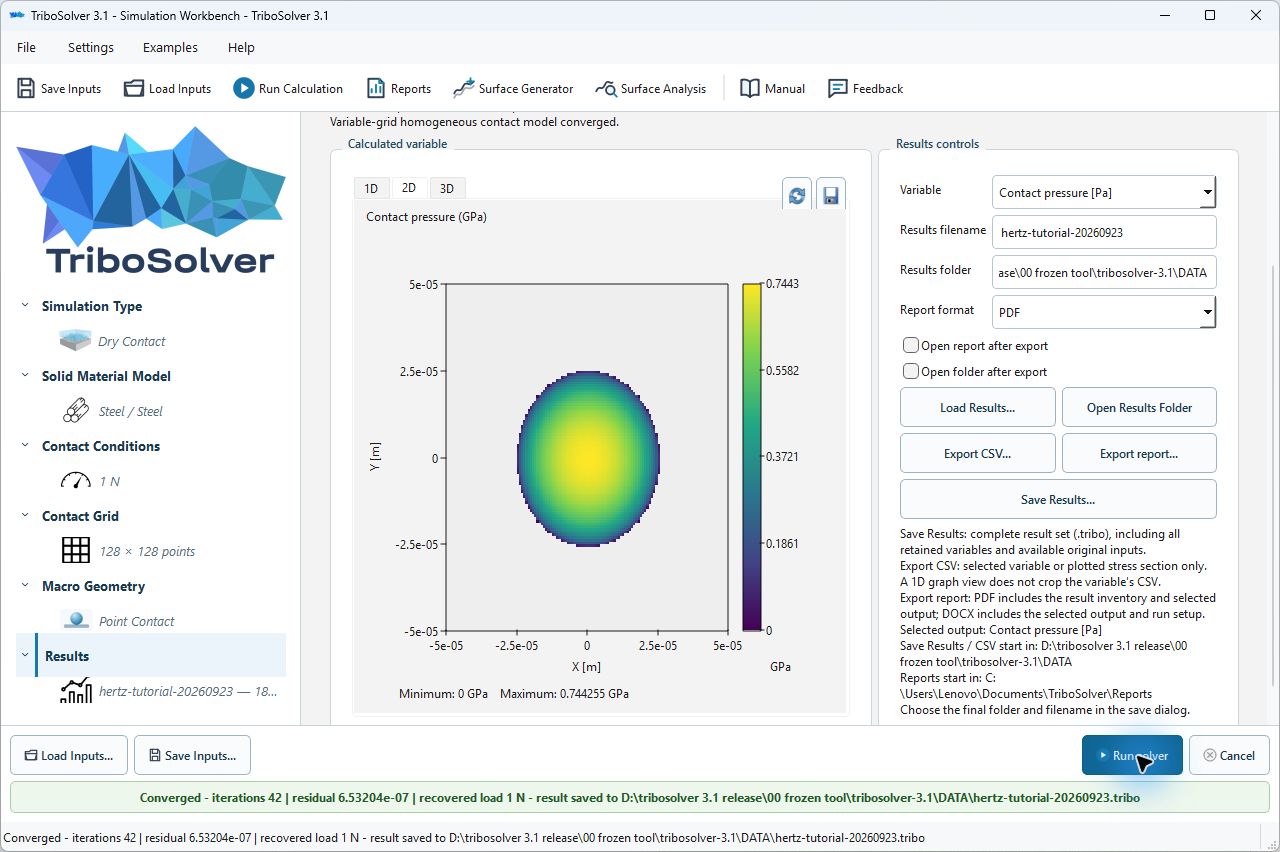
Smooth Hertz contact
Build a smooth contact from scratch, inspect the pressure map and compare key outputs with the Hertz analytical solution.
Follow the tutorial


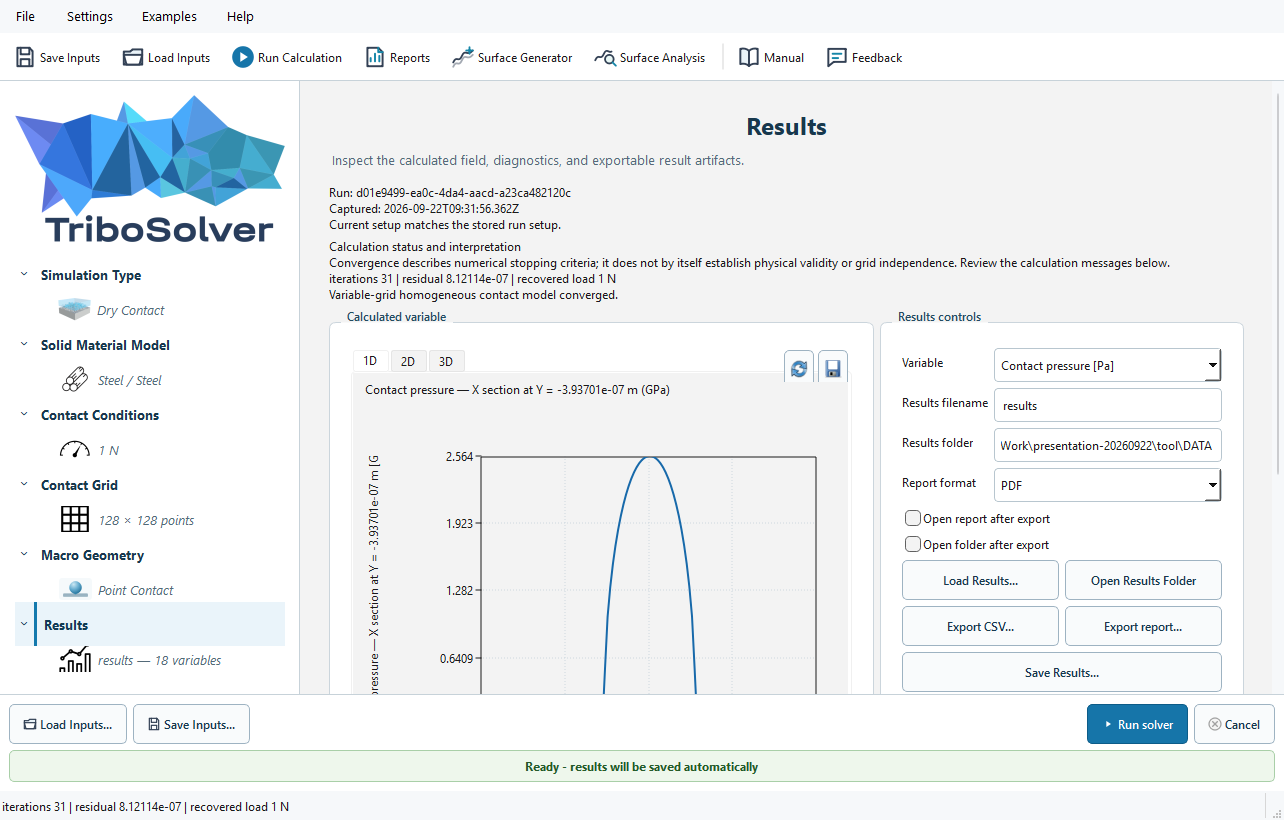



Build a smooth contact from scratch, inspect the pressure map and compare key outputs with the Hertz analytical solution.
Follow the tutorial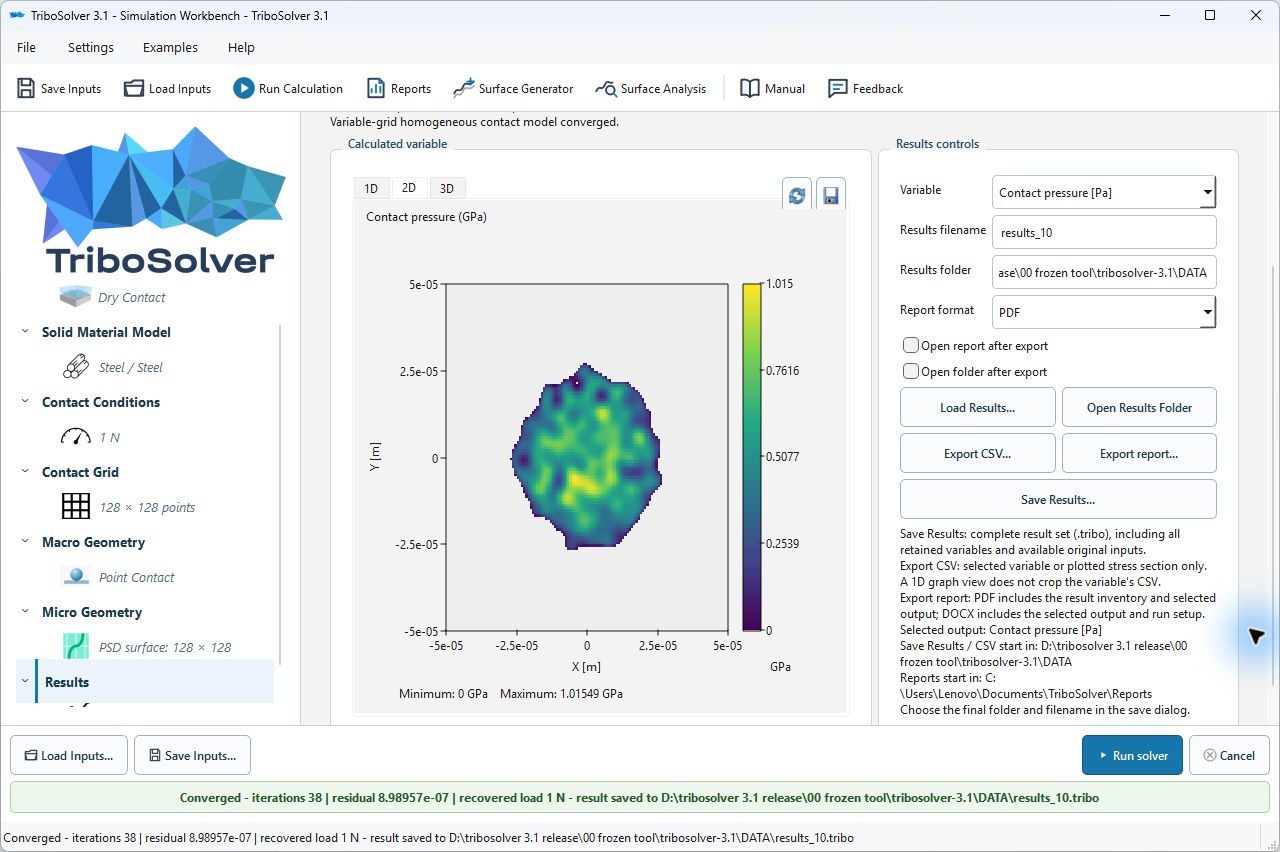
Generate a reproducible rough surface, calculate the contact pressure and learn how to interpret and export the results.
Follow the tutorialExplore how published research used TriboSolver and its earlier generations to investigate real contact problems. Each article explains the physical problem, model inputs, findings and limitations. Historical research is distinguished from capabilities and verification of the current release.
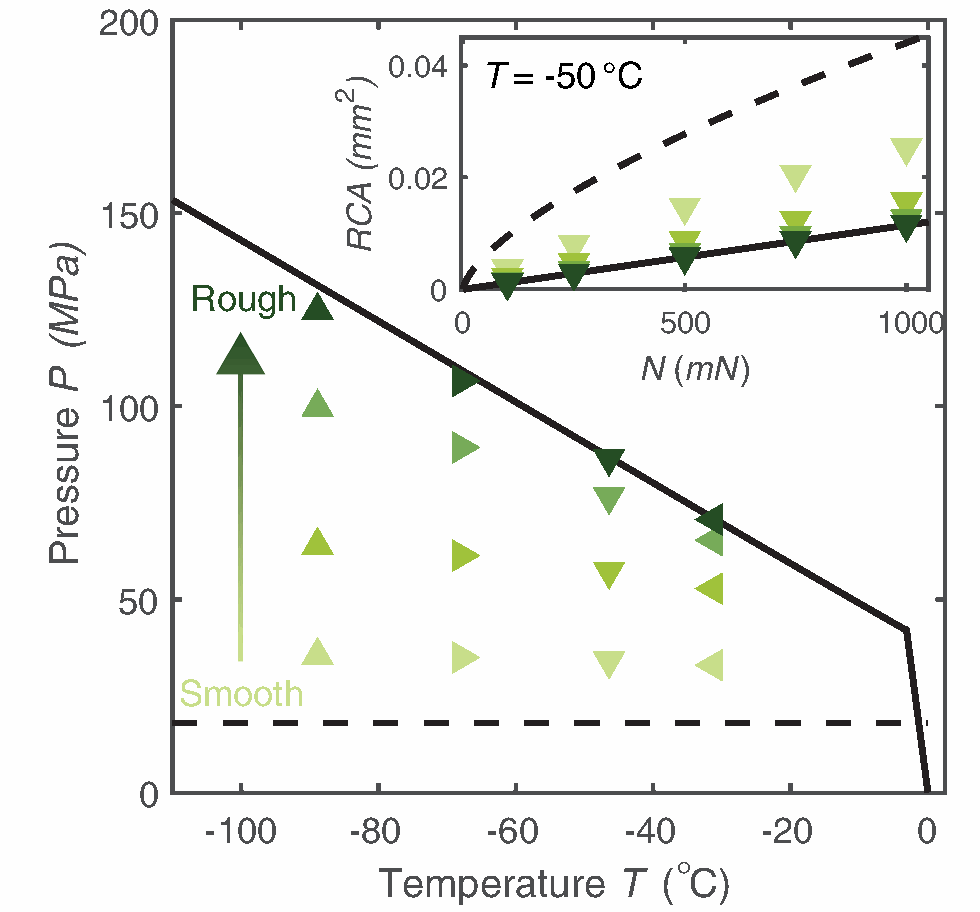
Why can one object slide easily on ice while another grips or scrapes? This application note examines a 2021 study that combined friction experiments with contact calculations to connect measured…
Read the research note →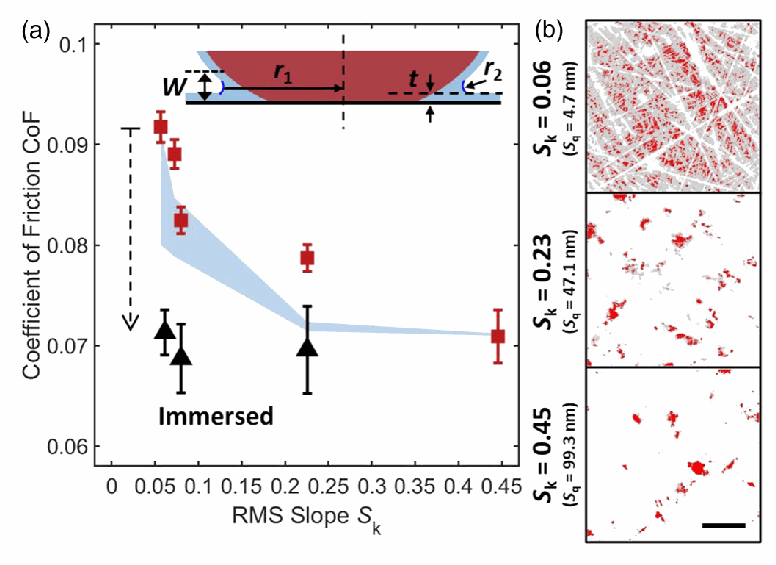
Polishing does not always reduce friction. In humid air, smoother surfaces can support larger regions of condensed water, creating an attractive force around the microscopic solid-contact spots. This application note…
Read the research note →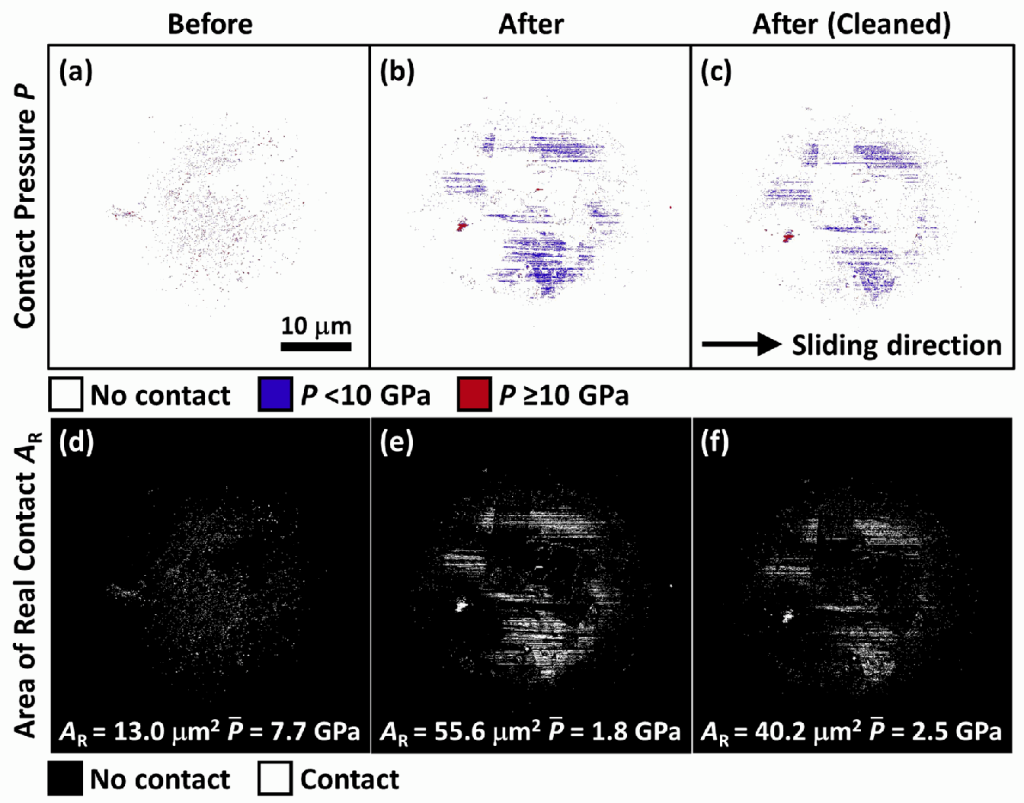
A new sliding contact changes as its highest asperities deform or wear away. This application note explains how a silicon carbide–silicon study connected measured surface changes with calculated pressure, real…
Read the research note →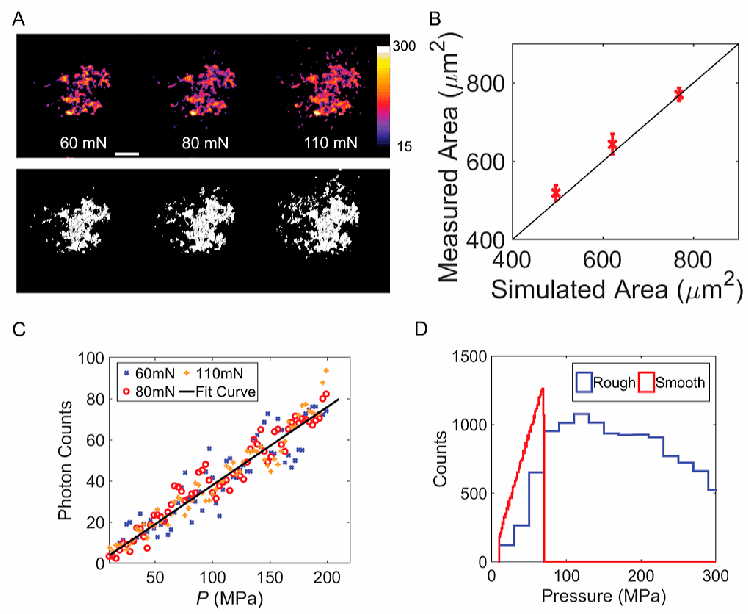
An optical contact image does not automatically reveal local pressure. This application note explains how a 2024 study combined a pressure-sensitive fluorescent probe with TriboSolver calculations for a rough polymer…
Read the research note →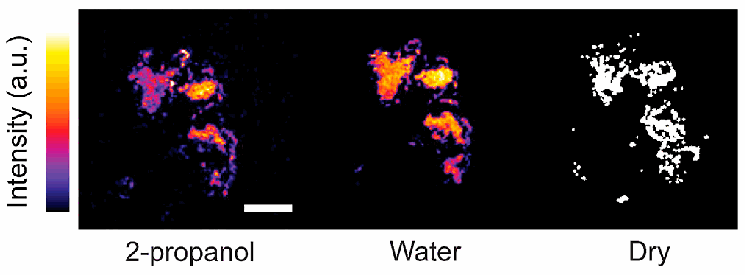
Lower friction can reflect a smaller contact area or an interface that is easier to shear. This note explains how a polypropylene–glass study separated those possibilities using fluorescence measurements and…
Read the research note →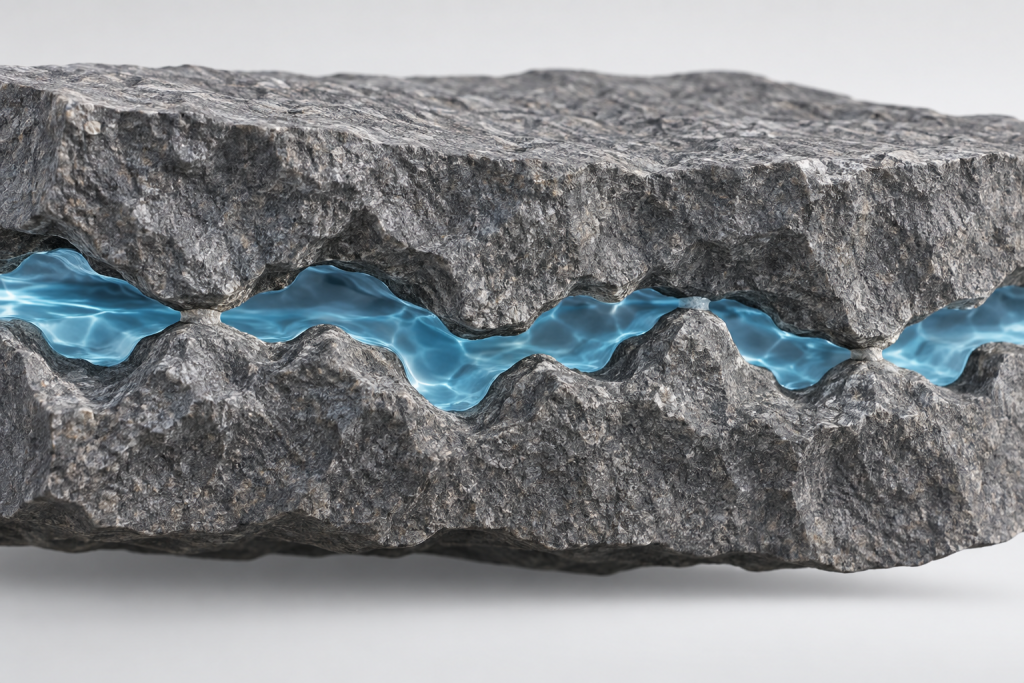
A rough fracture is a network of contacts and openings rather than a uniform water channel. This note explains how experiments on shaped Carrara marble surfaces were connected to a…
Read the research note →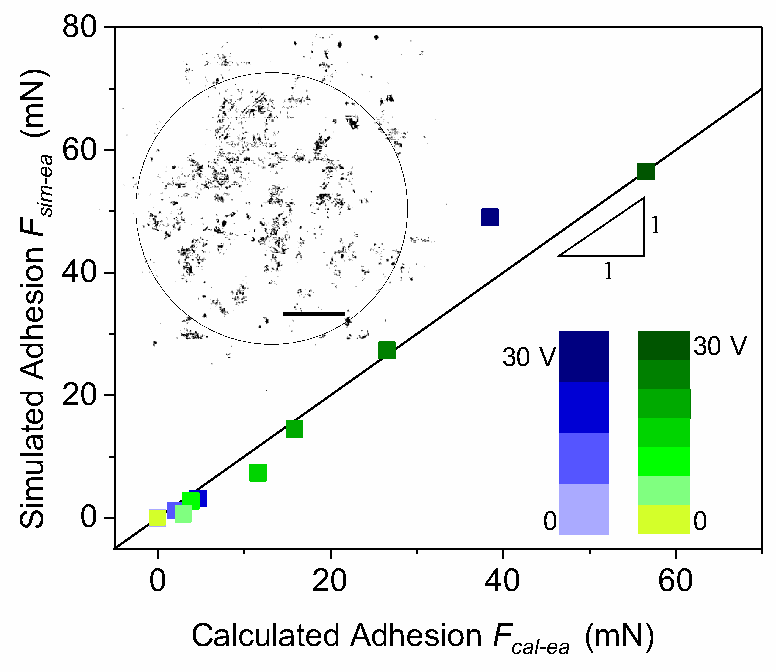
Electrical attraction between rough surfaces depends strongly on the smallest gaps around their contact patches. This note explains how a silicon-contact study combined a TriboSolver mechanical gap field with a…
Read the research note →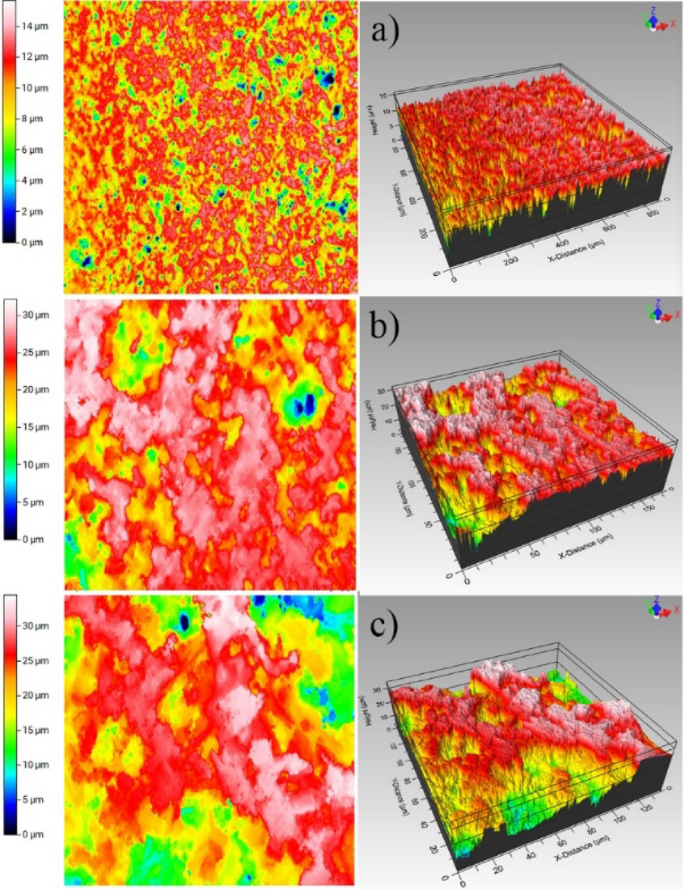
Surface roughness can change wear much more strongly than it changes friction. This note examines a ceramic-bead and alumina comparison in which TriboSolver supplied contact-pressure estimates for three surface finishes.…
Read the research note →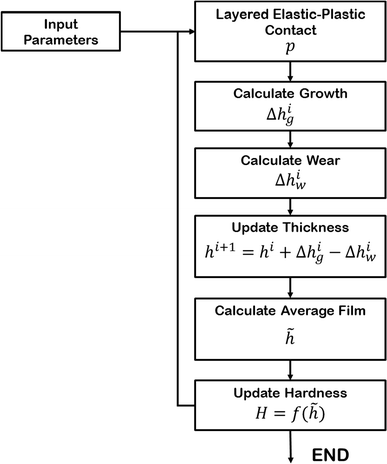
Protective tribofilms can grow and wear at the same time. This note explains a historical model that combined layered contact mechanics with stress-activated chemical growth and film removal. Comparisons covered…
Read the research note →We use optional Google Analytics cookies to understand how visitors use the website. May we enable them?
Essential functionality, including checkout and payments, works either way. If you choose OK, Google receives analytics data about visits to eligible public pages, using browser identifiers. We remember your choice in this browser for six months. You can change it here at any time. Withdrawing stops future analytics; it does not erase data already received by Google. Payment and security services are separate from this analytics choice. Google Privacy Policy.